

Views: 0 Author: Site Editor Publish Time: 2026-10-16 Origin: Site
You are thirty minutes into a high-intensity reformer session. Sweat builds. You push out into a heavy plank. Suddenly, your toes lose traction on the footbar. Sliding feet not only ruin your form but completely shatter your mental focus. While going barefoot or wearing standard cotton socks might seem convenient, they inevitably lead to dangerous instability and hygiene risks in shared studio spaces.
Pilates socks equipped with specialized grip soles serve as the ultimate engineering solution for this exact problem. In this comprehensive technical guide, we will break down the biomechanics of grip technology, evaluate the undeniable benefits across different studio disciplines, and outline how to specify the perfect pair to elevate your workout safely.
Safety First: High-friction grip soles prevent dangerous slips and falls, allowing practitioners to hold poses longer under high shear stress.
Hygiene Matters: Specialized footwear creates a critical protective barrier between skin and shared studio equipment, significantly mitigating cross-contamination risks.
Enhanced Performance: Proper traction activates the correct intrinsic foot muscles. This improves proprioception, balance, and overall biomechanical efficiency.
Studio Compliance: Boutique fitness studios now strictly mandate the use of grip socks for liability management and equipment preservation.
Customization is Key: From targeted arch compression to aesthetic branding, custom grip footwear offers a functional yet unique way to optimize performance.
To truly understand the efficacy of specialized studio footwear, we must examine its anatomy from a manufacturing perspective. Unlike everyday garments designed primarily for warmth, these socks are engineered for high-friction performance. The defining feature lies on the plantar surface—the sole—which is embedded with strategically placed grip patterns.
Specifically, these patterns are manufactured from high-grade silicone or polyvinyl chloride elastomers. When downward pressure is applied during a workout, these nodes compress slightly. This increases the surface area contact between the foot and the floor. The result? A high coefficient of friction against smooth surfaces like wooden floors, polyurethane yoga mats, and vinyl reformer carriages. This mechanical lock prevents lateral and longitudinal slipping, providing a stable foundation for dynamic movements.
Furthermore, stability in barefoot-style workouts relies heavily on intricate foot mechanics. A secure grip allows the toes to splay out naturally, broadening your base of support. Grip soles cleverly mimic the tactile feedback of the barefoot experience while artificially enhancing traction. By preventing the foot from sliding, these socks allow the stabilizing muscles of the ankle to engage efficiently without overcompensating for instability.
Many practitioners passionately advocate for going barefoot, citing a desire for a natural feel. While barefoot practice has historical roots, it presents significant modern drawbacks. As your core body temperature rises, the eccrine glands in your feet produce sweat. This moisture acts as a dangerous lubricant on smooth mats, drastically reducing traction. Walking barefoot in shared environments also exposes the skin directly to dermatophytes left behind by other users.
In contrast, wearing standard synthetic athletic socks is a recipe for disaster in Barre or Pilates classes. Regular socks are inherently designed to reduce friction inside a shoe. When worn without shoes on a polished studio floor, they offer absolutely zero traction. Attempting a high-tension movement forces your leg muscles to strain simply to keep your feet from flying out from underneath your body.
Recent fitness industry data reveals a massive operational shift in boutique fitness regarding this exact issue. Since 2021, over 65% of premium Pilates and Barre studios have transitioned from "barefoot-optional" to strict mandatory grip footwear policies. This is not merely a passing trend. It represents a calculated risk management strategy to lower liability premiums and extend the lifecycle of expensive reformer upholstery.
Bridging the gap between these flawed approaches, Grip Yoga Socks systematically resolve the vulnerabilities of both barefoot and regular sock practices. They offer a highly effective hybrid solution. You get the sensory feedback of being barefoot, perfectly combined with thermal regulation, hygienic protection, and the enhanced safety of a structured garment.
| Feature Matrix | Barefoot Practice | Regular Athletic Socks | Grip Yoga Socks |
|---|---|---|---|
| Traction Control Dry | High | Extremely Low | High |
| Traction Control Sweaty | Low Prone to slipping | Extremely Low | High Maintains friction |
| Hygiene Protection | None Direct contact | Moderate | High Barrier provided |
| Thermal Regulation | Poor Cold feet | Good | Excellent |
Pilates and Barre workouts involve highly specialized equipment that demands absolute precision. On a Pilates reformer, practitioners push against a moving carriage using a stationary footbar. If a foot slips during a high-resistance extension, the carriage can snap back violently. Grip soles utilize their silicone nodes to confidently lock the foot in place against the footbar. Similarly, maintaining relevé in Barre classes requires unwavering stability. Grip soles ensure that the feet remain firmly anchored to support the body's weight during high-tension isometric holds.
Shared fitness spaces are high-traffic areas. Despite rigorous cleaning protocols, yoga mats and wooden floors harbor microscopic microbes. Conditions such as tinea pedis are commonly transmitted in damp environments. Wearing specialized socks acts as a crucial sanitary barrier. It physically separates your epidermis from potentially contaminated surfaces, significantly reducing the risk of dermatological infections.
Proper biomechanical alignment is the foundational cornerstone of both disciplines. When you are subconsciously worried about your feet sliding, you instinctively alter your body mechanics to compensate. This often leads to gripping the floor with your toes or shifting weight unevenly across the pelvis. By completely eliminating the fear of slipping, grip soles allow you to focus entirely on core engagement and precise form.
Thermal regulation is vitally important for maintaining muscle elasticity. Cold environments cause blood vessels in the extremities to constrict, leading to stiff connective tissues and a higher risk of micro-tears. Pilates socks efficiently retain body heat, promoting increased blood flow to the feet and ankles. This localized warmth keeps the plantar fascia pliable, facilitating deeper and safer stretches.
Repetitive friction is the primary culprit behind painful blisters. In Pilates routines, feet are frequently placed inside coarse looped straps. The repetitive rubbing of this heavy strap material against bare skin quickly causes abrasions. The soft knitted fabric of grip socks provides a much-needed protective cushion to absorb the friction and prevent mechanical damage to the skin.
While traditional yoga is often practiced barefoot, modern variations like Hot Yoga introduce a highly disruptive variable: excessive sweat. As perspiration drips onto a polyurethane yoga mat, it creates a fluid boundary layer. This drastically lowers the mat's friction coefficient. High-quality Anti-Slip Sports Socks are specifically engineered to conquer this frustrating issue. The raised silicone grips penetrate through the moisture layer, establishing direct mechanical traction with the mat.
Advanced balancing asanas require a rock-solid foundation. Poses such as Warrior III place an immense load on your stabilizing muscles. If the grounding foot micro-slips even a fraction of an inch, the entire kinetic chain is disrupted. Wearing grip socks provides practitioners with both the physical stability and the psychological confidence required to attempt these complex poses. This enhanced traction allows for deeper engagement of the leg muscles without the paralyzing fear of sliding out of alignment.
From a business operations perspective, studios invest heavily in commercial-grade equipment. If a client slips and sustains an injury due to a lack of traction, the studio faces severe legal liability. Mandatory grip sock rules act as a proactive safety measure. They standardize the level of traction for every participant, drastically reducing the incidence of slip-and-fall accidents.
Beyond human safety, these policies play a crucial role in asset preservation. Human skin naturally secretes sebum and sweat, both of which are mildly acidic. Over time, repeated contact with these biological secretions rapidly degrades the synthetic leather upholstery on expensive studio equipment. It causes the material to crack, discolor, or become permanently slippery. By requiring socks, studios create a reliable textile barrier that absorbs sweat and oils, extending the lifespan of their equipment and reducing maintenance overhead.
When evaluating equipment for studio workouts, selecting the right footwear requires a systematic engineering approach. Not all grip socks are manufactured to the same specifications. Understanding the underlying material science is crucial for optimizing your practice.
The foundation of any high-performance athletic garment is its fabric composition. During a rigorous reformer session, the plantar surface of the foot generates significant moisture. If this moisture is not managed properly, it compromises the friction between the foot and the sock, leading to internal slippage. Look for moisture-wicking fabrics blending premium combed cotton with elastane. A standard professional composition often features roughly 80% cotton for breathability and 20% synthetic blends for superior elasticity and rapid drying capabilities.
The primary functional component is the traction material applied to the sole. Manufacturers utilize either silicone or PVC for the grip nodes. Silicone is widely considered superior due to its higher heat resistance, flexibility, and longevity. It maintains its tackiness over time and strongly resists degrading during the washing process. Ensure the grip coverage extends edge-to-edge—from the extreme heel to the very tips of the toes. Sparse dot patterns leave the midfoot vulnerable to sliding.
The structural design of the toe box significantly impacts proprioception. Closed-toe designs encapsulate the entire foot, providing maximum protection against studio dust and friction from equipment straps. Conversely, toeless designs expose the tips of the toes. This specific design mimics the natural barefoot experience, allowing for unrestricted toe splaying—a critical biomechanical function that broadens the base of support.
A common failure point in poorly designed athletic socks is the frustrating tendency for the fabric to twist around the foot during rotational movements. To counteract this, premium options incorporate targeted arch support. This takes the form of an elasticized compression band woven directly into the midfoot area. It anchors the sock firmly to the skin, ensuring the grip soles remain perfectly aligned with the bottom of the foot.
In the modern fitness landscape, activewear is a vibrant form of personal expression. Grip footwear has evolved from a purely functional accessory into a coveted statement piece. Practitioners increasingly coordinate their footwear with their overall athletic wardrobe, utilizing various colors, strappy ballet-inspired designs, and intricate knitted patterns.
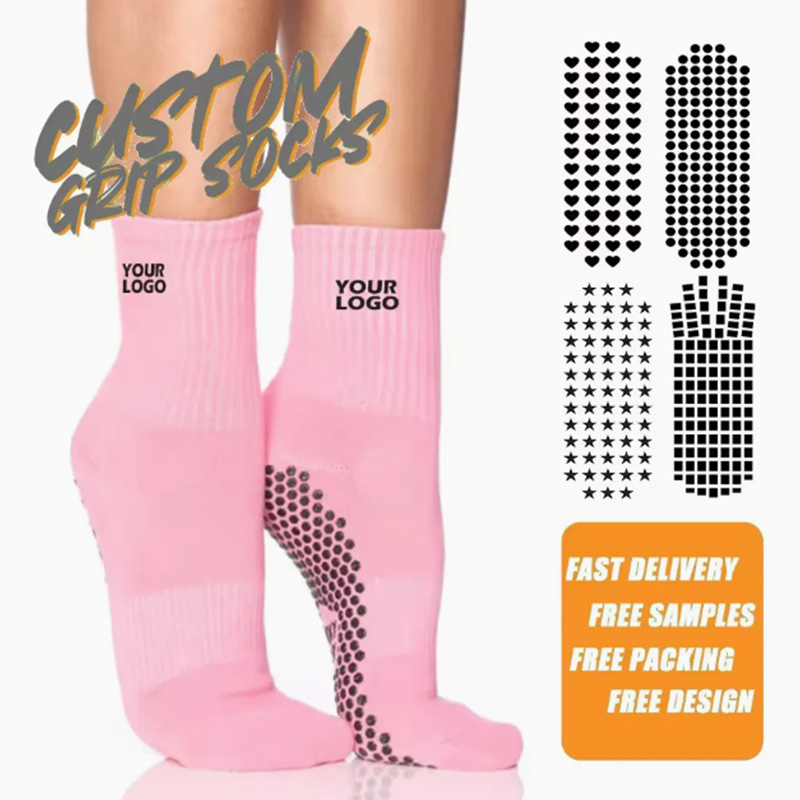
For fitness entrepreneurs and gym managers, investing in wholesale Custom Grip Socks represents a highly strategic business decision. Procuring socks customized with the studio’s logo and specific grip patterns serves multiple operational purposes.
First, it guarantees that all clients have immediate access to high-quality safety gear, ensuring strict compliance with liability policies. Second, it creates a highly profitable retail revenue stream right at the front desk. Finally, it acts as a powerful marketing tool. When clients wear branded socks outside the studio or feature them in social media posts, it builds deep brand loyalty and serves as organic advertising within the local fitness community.
Whether you are pulsing at the Barre, flowing through an intense Yoga sequence, or pushing through a heavy Pilates reformer routine, grip soles are not just an optional accessory. They are an absolute necessity for safety, hygiene, and peak performance. They prevent dangerous slips, improve your postural alignment, and protect shared studio equipment from premature wear and tear.
Investing in high-quality specialized footwear is a direct investment in your overall fitness journey and well-being. To prioritize your physical safety and experience transformative stability, we highly recommend evaluating your specific workout needs and sourcing professional-grade grip socks. Explore the extensive range of engineered performance options at socksupplychain.com to find the perfect technical match for your studio practice today.
While practicing barefoot is a viable option for personal home workouts, it presents significant drawbacks in a commercial studio setting. Bare feet naturally perspire during physical exertion, which lowers the coefficient of friction and creates a severe slipping hazard on smooth wooden floors or vinyl reformer carriages. Wearing specialized footwear provides an essential hygienic barrier, protecting you from infections while ensuring you maintain the necessary traction to execute movements safely.
Using standard everyday socks for Barre, Yoga, or Pilates is highly discouraged and often explicitly prohibited by studio safety guidelines. Regular socks are typically constructed from smooth cotton or wool blends that lack any friction-enhancing materials on the sole. When these smooth fabrics interact with polished studio floors, they act as a dangerous sliding mechanism. This complete lack of traction significantly increases the risk of acute muscle strains, joint hyperextension, and falls.
While both categories utilize traction technology, they are engineered for very different biomechanical demands. Grip yoga socks are specifically tailored to facilitate flexibility and proprioception. They often feature a thinner material profile to maintain a close tactile connection to the floor, articulated toe separations, and targeted arch compression. In contrast, general anti-slip sports socks used for trampoline parks are generally thicker, bulkier, and lack the specific anatomical tailoring required for precise studio workouts.
Yes. By maintaining a high coefficient of friction between your foot and the equipment, grip socks prevent the sudden, uncontrolled shear movements that typically cause muscle strains and ligament sprains. They allow your stabilizing muscles to fire correctly, rather than overworking to prevent a fall, directly reducing the likelihood of acute workout injuries.
The optimal composition is a blended fabric. A blend of premium combed cotton for moisture absorption, combined with elastane or spandex for shape retention and compression, yields the best results. For the grip nodes themselves, 100% silicone is the industry standard due to its superior durability, heat resistance during washing, and long-lasting tackiness compared to cheaper PVC alternatives.
Proper laundering protocols are critical for preserving the integrity of silicone or PVC grips. Always turn the garments inside out before placing them in the washing machine. This protects the traction nodes from abrasive friction against other clothing items. Wash them on a gentle cycle using cold water. Strictly avoid the use of fabric softeners, as these leave a chemical residue that degrades the silicone. Finally, always air dry the garments flat, as the high ambient heat of a tumble dryer can melt or detach the grips.


