

Views: 0 Author: Site Editor Publish Time: 2026-10-21 Origin: Site
Selling branded studio merchandise drives strong profits. However, ordering specialized gear in bulk often carries hidden risks for studio owners and fitness brands. Poor grips peeling after a single wash or badly stitched seams instantly ruin client trust. To navigate this procurement cycle successfully, buyers must understand how athletic apparel manufacturing works on the factory floor. This guide breaks down the critical steps to sourcing, specifying, and ordering specialized footwear safely. Proper execution ensures your investment translates into a lucrative retail stream rather than dead stock.
Grip Quality is Non-Negotiable: Silicone grips demonstrate superior durability and safety compared to Polyvinyl Chloride alternatives. This makes them the definitive industry standard for specialized footwear.
Material Matters: The optimal blend of combed cotton, nylon, and elastane ensures necessary breathability, physical comfort, and long-term shape retention.
Customization Drives Revenue: Strategically designed apparel featuring studio branding dramatically increases client loyalty while establishing a high-margin retail revenue stream.
Understand the Math: Balancing Minimum Order Quantities with unit costs is a critical financial exercise. It maintains healthy inventory levels without tying up excess capital.
Always Request a Sample: B2B buyers should never execute a bulk contract without first testing a physical prototype for fit, wash shrinkage, and grip performance.
In the highly competitive fitness industry, brand visibility must extend far beyond the four walls of your studio. Branded apparel acts as a walking billboard. It carries your identity into the local community and drives organic awareness. Beyond aesthetics, unified branded gear has a documented psychological effect on studio members.
Picture a packed reformer class where attendees are wearing cohesive, thoughtfully designed Custom Socks. This visual unity fosters a distinct sense of belonging. It reinforces a premium, exclusive studio culture that standard, unbranded apparel simply cannot achieve.
From a purely operational perspective, retail corners in fitness studios optimize the revenue generated per square foot. The economics of bulk purchasing are highly favorable when executed correctly. The wholesale cost of customized footwear is relatively low compared to the standard retail markup. This markup frequently ranges from 100 percent to 200 percent depending on your brand's market positioning.
The practical necessity of specialized footwear in reformer and mat-based classes cannot be overstated. Technical grip gear is essential for enforcing strict hygiene and safety protocols. On a reformer machine, the carriage moves dynamically under tension. A sudden slip can lead to severe muscle strains or joint injuries. Mandating foot coverings prevents the spread of bacteria on shared studio equipment. This protects clients physically while simultaneously mitigating liability risks for the business owner.
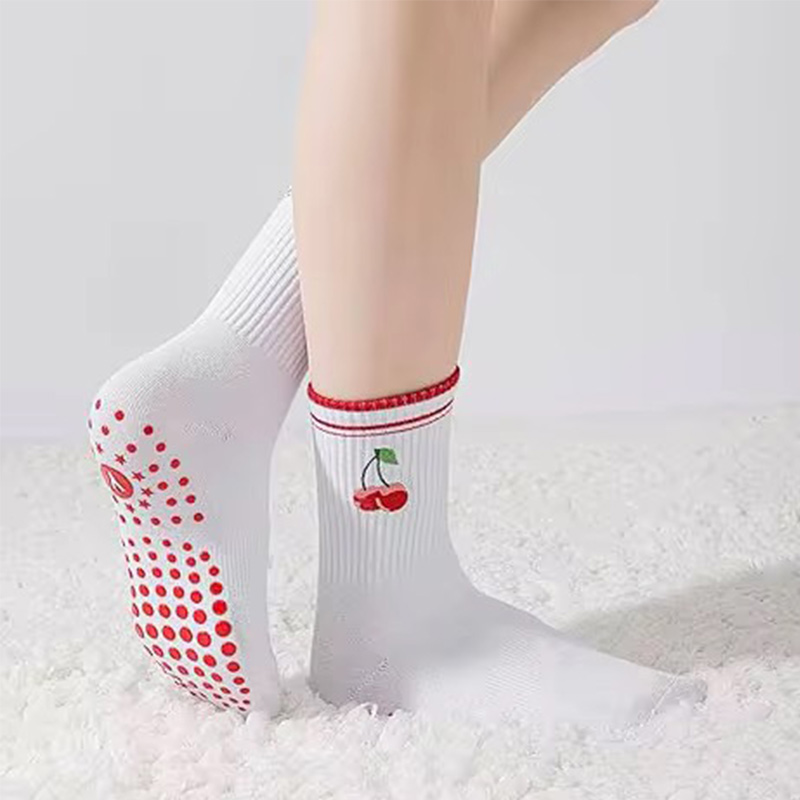
Boutique fitness studios are experiencing a shift in consumer demands. Post-pandemic hygiene awareness accelerated the initial demand for mandatory foot coverings. Today, B2B buyers and end-consumers demand advanced functionality mixed with eco-conscious manufacturing. Market data indicates a strong preference for sustainable athletic wear. Performance metrics are now weighed equally alongside ethical supply chains.
Studios stocking generic, low-quality merchandise are seeing reduced retail sell-through rates. Conversely, spaces offering premium, purpose-built gear experience higher impulse buys. Aligning studio merchandise with these sustainable practices serves as a powerful Unique Selling Proposition. Offering items made from organic cotton or recycled polyester appeals to modern demographics and justifies a higher retail price point.
The defining feature of any functional studio sock is its traction system. Buyers must understand the critical differences between grip materials before finalizing an order. The manufacturing market primarily offers two options: Polyvinyl Chloride and Silicone.
Silicone is the gold standard for premium footwear. It provides superior heat resistance. The traction nodes will not melt, degrade, or peel off after repeated cycles in a hot commercial dryer. Polyvinyl Chloride offers a lower initial unit cost, but it tends to harden and crack over time. Grip patterns also require careful consideration. Buyers must choose between edge-to-edge coverage for maximum beginner stability, or targeted pressure point grips that allow natural foot articulation for advanced practitioners.
| Feature | Silicone Grips | Polyvinyl Chloride Grips |
|---|---|---|
| Durability | High resistance to peeling and cracking | Low to Medium lifespan, prone to cracking |
| Heat Resistance | Excellent stability in commercial dryers | Poor stability, may melt or warp under heat |
| Traction Performance | Superior wet and dry grip adhesion | Adequate initial grip, degrades rapidly with sweat |
| Production Cost | Slightly higher per-unit manufacturing cost | Lower baseline unit cost |
A sock slipping off the heel during a workout causes customer dissatisfaction. High-quality designs mitigate this by incorporating a mid-foot compression band. This ribbed, elasticized structure wraps securely around the arch of the foot. It locks the fabric in place during multidirectional movements. This structural support prevents the material from bunching, ensuring the anti-slip grips remain perfectly aligned with the sole.
The baseline material composition dictates breathability, moisture management, and product lifespan. Combed cotton is highly favored for its exceptional softness. The combing process removes short fibers, leaving only long, durable threads. However, pure cotton lacks the necessary elasticity for athletic performance. Synthetic fibers like nylon offer superior structural durability.
In textile engineering, achieving the perfect balance requires precise blending. A standard high-end spec sheet for premium Yoga Socks dictates 80 percent combed cotton, 15 percent nylon or spandex, and 5 percent elastane. This exact ratio balances moisture-wicking properties with structural snap-back recovery.
Machine specifications also matter heavily. Professional-grade studio footwear is typically crafted on 144-needle or 168-needle knitting machines. This specific needle count creates a dense, durable weave that prevents the fabric from thinning out over the heel and toe box. A finished pair usually weighs between 30 to 40 grams. This weight provides ample terry cushioning on the sole without feeling overly bulky inside studio shoes or during barefoot exercises.
Selecting the correct silhouette depends heavily on your studio's specific discipline. Ankle styles remain the most versatile, offering a minimalist aesthetic. Crew lengths provide additional ankle support and offer a much larger canvas for brand logos. Five-toe designs are highly specialized. They allow for natural toe splay, which is critical for balance and tactile feedback during intricate movements.
Translating a digital logo onto a knitted product requires technical foresight. Jacquard knitting physically weaves the logo into the fabric using differently colored yarns. This results in a highly durable design that never peels. Embroidery offers a premium, raised texture excellent for small ankle logos. Alternatively, custom grip molding allows the anti-slip silicone on the sole to form the shape of the studio name.
Brand consistency is paramount during manufacturing. Digital mockups on a backlit computer screen look vastly different from physical dyed yarn. Buyers must utilize the Pantone Matching System. Providing specific Pantone Solid Coated color codes ensures the factory dyes the yarn to match your exact brand aesthetic.
Minimum Order Quantities offset the significant setup costs involved in production. Before knitting begins, engineers program the Jacquard machines, source specific yarn colors, and calibrate the silicone molding plates. Standard minimums often range from 300 to 500 pairs. A practical strategy to meet these thresholds is negotiating to group different sizes under one single colorway.
The unit price quoted by a manufacturer is a calculated sum of several variables. Upgrading to premium combed cotton increases the base cost. Multiple yarn colors require complex machine programming. Opting for medical-grade silicone is more expensive to source and apply than basic alternatives. Custom packaging, such as printed belly bands, adds cents to the final unit cost but significantly elevates the retail presentation.
Never commit to a bulk order without rigorously testing a physical sample. Digital files cannot simulate tactile quality, stretch recovery, or grip performance under physical stress. Once a prototype arrives, wash it in cold water and tumble dry on low to check for shrinkage. Apply lateral shear force by aggressively rubbing the sole against a mat. This ensures the silicone nodes remain firmly attached. Finding a facility specifically equipped for Grip Sports Socks ensures direct access to the specialized heat-press machinery required for durable traction.
Procuring high-quality merchandise is only half the equation. The other half involves strategic inventory management. Miscalculating size distributions is a common pitfall. Ordering equal quantities of every size leads to a surplus of extra-small and extra-large units. You must forecast demand based on the demographic realities of your client base.
For a standard fitness studio, a widely accepted sizing distribution follows a bell curve approach. A reliable ratio is 1 to 3 to 3 to 1 across standard sizes. In an order of 400 pairs, you would request 50 Small, 150 Medium, 150 Large, and 50 Extra Large. Aligning inventory purchases with statistical averages maximizes sell-through rates.
Physical placement dictates retail velocity. Display your merchandise at eye level directly adjacent to the reception desk. This capitalizes on the dwell time when clients are checking in. Train front desk personnel on the functional engineering of the product. They should confidently explain why these specific items enhance the workout. Creative promotional bundling, such as offering a complimentary pair with a high-tier membership, incentivizes higher-ticket sales.
Executing a successful bulk apparel order requires meticulous planning and a deep understanding of manufacturing mechanics. From specifying 144-needle knitting machines to ensuring the application of premium heat-pressed silicone grips, every technical detail impacts the final user experience. Partnering with a specialized manufacturer and implementing data-driven inventory strategies transforms a simple piece of footwear into a powerful engine for brand loyalty. Ready to upgrade your studio's retail offerings? Evaluate your specific brand requirements and source premium manufacturing partners directly from https://www.socksupplychain.com to secure your custom physical sample today.
The primary distinction lies in functionality and safety. Regular everyday apparel lacks traction, making them dangerous on polished studio floors or specialized equipment. Pilates-specific footwear is engineered with high-grade silicone anti-slip grips on the soles to provide maximum traction. They also feature mid-foot compression bands to prevent the fabric from twisting during dynamic movements.
Yes, specialized grip footwear is highly interchangeable across low-impact, barefoot-style disciplines. The core engineering requirements are identical. You need excellent anti-slip properties to maintain postures, breathable moisture-wicking materials to manage sweat, and a snug fit that prevents internal slipping. A high-quality pair designed for a reformer performs equally well on a yoga mat.
The longevity of the anti-slip grips depends on manufacturing quality and the end-user care routine. Premium silicone grips, applied using proper heat-press technology, are highly durable. With appropriate washing practices, the silicone nodes maintain their structural integrity for the entire usable lifetime of the underlying fabric. Inferior alternatives begin to harden and peel after a few dozen wash cycles.
Minimum requirements vary depending on the manufacturer's scale and the complexity of your custom design. Generally, standard minimums for bespoke manufacturing range from 100 to 500 pairs per specific design and colorway. This exists because factories must account for labor costs associated with calibrating knitting machines and preparing heat-press molds.
Turn the items inside out before washing to protect the grips from direct abrasion against other garments. Wash using cold water on a gentle cycle. Avoid using fabric softeners entirely. These products leave a lipid-based coating on the silicone, which drastically reduces friction and anti-slip capabilities. Air drying is highly recommended to prevent elastic fibers from degrading.
The industry standard for premium studio footwear is a precise blend of 80 percent combed cotton, 15 percent nylon or spandex, and 5 percent elastane. The combed cotton provides exceptional sweat absorption and softness against the skin. The nylon ensures structural durability to prevent holes, while the elastane provides the necessary stretch recovery so the garment retains its shape over time.
Begin by determining your target demographic and preferred silhouette, such as ankle or crew length. Next, prepare your brand logo in a high-resolution format and select your exact Pantone color codes. Reach out to a specialized athletic apparel manufacturer with these details to request a digital mockup. Always order and test a physical prototype before committing to full production.


